
Relocating a business is a major investment, whether a company is expanding into new markets, opening a new facility, or moving its headquarters. Costs related to real estate, workforce recruitment, infrastructure, and operations can quickly add up, making affordability a key consideration during the decision-making process.
To attract new employers and support economic development, many state and local governments offer incentive programs that can help offset relocation expenses. From tax credits and property tax abatements to workforce training grants, these incentives can reduce costs and improve the long-term value of a relocation project.
Understanding how business relocation incentives work can help companies make more informed site-selection decisions and maximize available growth opportunities.
Why Companies Relocate Their Operations
A single factor rarely drives business relocations. Most organizations evaluate a combination of financial, operational, and strategic considerations before making a move. Common reasons for corporate relocation include:
- Reducing operating costs
- Accessing a larger talent pool
- Expanding into new markets
- Improving supply chain efficiency
- Taking advantage of tax benefits
- Supporting long-term growth plans
- Moving closer to customers, suppliers, or distribution networks
In many cases, relocation is part of a broader business strategy aimed at improving competitiveness and creating opportunities for future growth. Companies often assess factors such as workforce availability, infrastructure, market access, and operational efficiency when evaluating potential locations.
While these objectives can create significant opportunities, relocation costs often become a major concern during the planning process. This is one reason why state and local incentive programs can play an important role in helping businesses manage expenses and improve the financial viability of a relocation project.
How State and Local Incentives Help Reduce Relocation Costs
Relocating a business often requires significant investment in facilities, workforce expansion, equipment, and infrastructure. To encourage business growth and attract new employers, many state and local governments offer incentive programs that can help offset a portion of these costs.
These incentives are designed to support projects that create jobs, stimulate economic activity, and contribute to long-term regional development. Depending on the location and nature of the project, businesses may qualify for a range of financial benefits that improve the overall economics of a relocation.
Some of the most common incentives available to relocating businesses include:
- Tax credits tied to job creation or capital investment
- Property tax abatements and exemptions
- Workforce training grants
- Infrastructure and utility assistance
- Cash grants and performance-based incentives
- Site development and expansion support
While incentive programs can provide substantial savings, they are most effective when evaluated alongside other factors such as workforce availability, operating costs, transportation access, and long-term business goals.
Businesses often work with experienced firms such as Walton Management Services to assess incentive opportunities within the broader context of site selection, workforce strategy, and overall business expansion planning.
Which Relocation Incentives Deliver the Greatest Value?
Not all incentives provide the same level of benefit. The most valuable programs are typically those that help reduce major relocation expenses, improve cash flow, or lower long-term operating costs. Understanding how different incentives work can help businesses identify opportunities that align with their relocation and growth objectives.
Tax Credits
Tax credits can help reduce relocation and expansion costs by rewarding businesses for job creation, capital investment, and workforce growth. Programs such as the Work Opportunity Tax Credit (WOTC) may provide additional tax savings while supporting hiring and long-term business development.
Property Tax Relief
Property tax abatements and exemptions are often available to companies investing in new facilities or expanding existing operations. These programs can lower ongoing occupancy costs and improve the long-term economics of a relocation project.
Workforce Development Assistance
Recruiting and training employees can be expensive, especially when entering a new market. Many state and local governments support workforce development through grants, training funds, and hiring incentives. Businesses can also explore federal workforce development programs that help employers build skilled teams while reducing workforce-related expenses and supporting long-term workforce growth.
Businesses seeking to improve workforce planning and talent strategies can also benefit from Workforce Analytics and Workforce Solutions services.
Infrastructure Support
Some communities assist infrastructure improvements such as utilities, transportation access, site preparation, or facility upgrades. These programs can reduce upfront development costs and accelerate project timelines.
Performance-Based Incentives
Certain incentives are tied to specific commitments, such as job creation, capital investment, or economic impact. Businesses that meet established performance goals may qualify for grants or additional financial benefits throughout the life of a project.
The value of these programs varies by location and project type. For this reason, businesses should evaluate incentive opportunities alongside workforce availability, operating costs, infrastructure, and long-term growth plans rather than focusing solely on a single financial benefit.
How Incentives Can Impact the Total Cost of a Corporate Relocation
Relocation costs extend far beyond moving equipment or securing a new facility. Businesses often incur expenses related to real estate acquisition, workforce recruitment, employee training, infrastructure improvements, technology upgrades, permitting, and ongoing operational requirements. These costs can significantly increase the overall investment needed for a successful relocation project.
State and local incentive programs can help offset many of these expenses, improving both short-term affordability and long-term financial performance. For example, a company investing in a new facility may qualify for property tax relief, while workforce training grants can help reduce hiring and onboarding costs. Tax credits tied to job creation or capital investment may generate substantial savings over time.
Businesses evaluating relocation opportunities should consider incentive programs alongside factors such as workforce availability, operating costs, transportation access, and future growth potential. Organizations often work with experienced incentive consultants and site-selection specialists to identify opportunities that align with broader business objectives.
The table below highlights how different incentive types can help reduce relocation costs and support business growth.
Incentive Type | What It Supports | Potential Business Benefit |
Tax Credits | Job creation and capital investment | Reduces state tax liability and improves project ROI |
Property Tax Relief | New facilities and expansions | Lowers long-term occupancy and ownership costs |
Workforce Training Grants | Employee recruitment and training | Reduces workforce development and onboarding expenses |
Infrastructure Assistance | Utilities, roads, and site improvements | Helps lower upfront development and construction costs |
Performance-Based Incentives | Job creation and investment milestones | Provides additional financial rewards when project goals are achieved |
Cash Grants | Relocation and Economic Development Incentives projects | Offers direct funding to offset project expenses |
While incentive packages can create meaningful savings, they should be evaluated as part of the overall business case. A location offering fewer incentives may still provide greater long-term value if it delivers access to a stronger labor market, more efficient transportation networks, lower operating costs, or greater expansion opportunities.
The most successful relocation decisions balance available incentives with workforce strategy, operational requirements, and long-term business goals. By taking a comprehensive approach, companies can maximize both incentive value and long-term return on investment.
Important Factors to Consider Beyond Incentives
Although incentives can provide meaningful financial benefits, they should never be the sole factor driving relocation decisions.
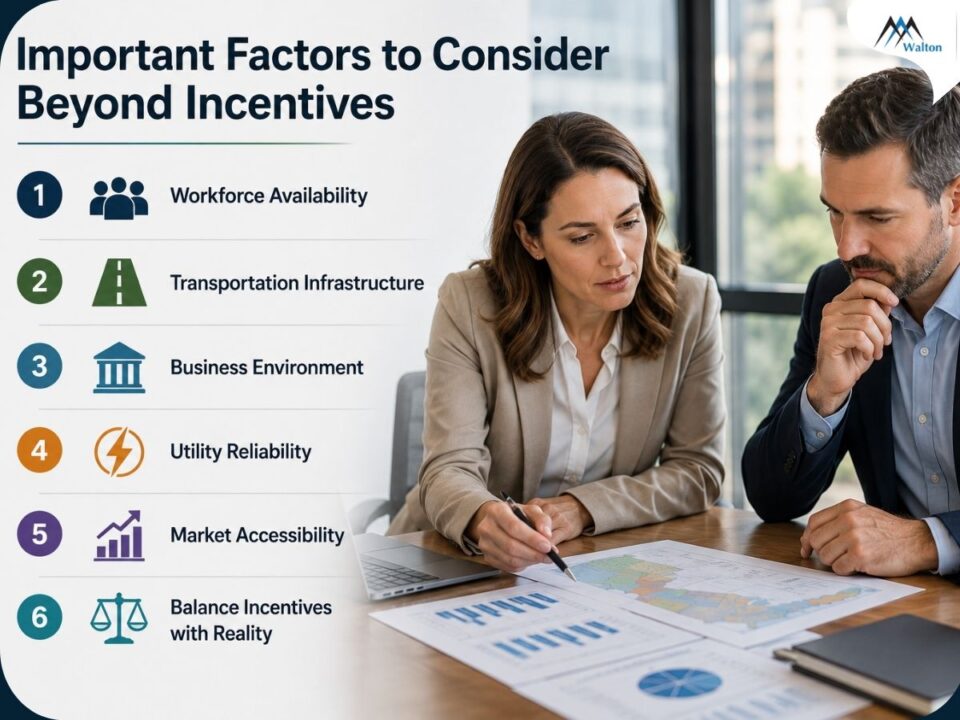
Business leaders should also evaluate:
Workforce Availability
Access to skilled labor remains one of the most important considerations for long-term success.
Transportation Infrastructure
Road networks, airports, ports, and rail access can significantly impact logistics and supply chain efficiency.
Business Environment
Regulatory requirements, permitting processes, and overall business climate should be carefully assessed.
Utility Reliability
Reliable electricity, internet connectivity, water access, and energy costs can affect operational performance.
Market Accessibility
Proximity to customers, suppliers, and strategic partners often influences long-term growth potential.
The best relocation decisions balance incentive opportunities with operational realities.
Common Mistakes Companies Make When Pursuing Relocation Incentives
Relocation incentives can provide significant financial benefits, but many businesses fail to maximize available opportunities due to common planning mistakes. Understanding these challenges early can help companies make better decisions and avoid costly setbacks.
Waiting Too Long to Explore Incentive Opportunities
Many incentive programs require businesses to engage with economic development agencies before making final location decisions or beginning a project. Waiting until after major commitments have been made may limit eligibility for certain incentives.
Focusing Only on Tax Savings
While tax credits and abatements can be valuable, they should not be the sole factor driving a relocation decision. Workforce availability, infrastructure, operating costs, and market access often have a greater long-term impact on business performance.
Overlooking Local Incentive Programs
Businesses frequently focus on state-level opportunities and overlook county, municipal, or utility-sponsored programs. In some cases, local incentives can provide substantial additional value when combined with state programs.
Ignoring Performance Requirements
Many incentives are tied to commitments such as job creation, capital investment, or operational milestones. Understanding these requirements is essential to maintaining eligibility and realizing the full value of available incentives.
Failing to Evaluate Long-Term Costs
An attractive incentive package may not always translate into the best long-term business outcome. Companies should evaluate total operating costs, workforce considerations, transportation access, and growth potential alongside available incentives before making a final decision.
How Businesses Can Maximize Available Relocation Incentives
Businesses that gain the most value from relocation incentives typically begin planning early and evaluate opportunities before making final location decisions. Taking a proactive approach can help identify programs that align with both immediate project needs and long-term business goals.
To maximize available incentives, businesses should:
- Explore incentive opportunities early in the planning process
- Compare multiple locations and programs
- Understand eligibility and compliance requirements
- Maintain accurate project documentation
- Evaluate long-term value, not just immediate savings
A strategic approach can help businesses secure meaningful incentives while selecting a location that supports sustainable growth and operational success.
Frequently Asked Questions About Corporate Relocation Incentives
What are business relocation incentives?
Business relocation incentives are financial programs offered by state and local governments to encourage investment, job creation, and economic development. These incentives may include tax credits, workforce training grants, property tax relief, and infrastructure assistance.
Do all businesses qualify for relocation incentives?
Eligibility depends on factors such as industry, investment size, job creation potential, and location. Requirements vary by program and jurisdiction.
Are local incentives available in addition to state programs?
Yes. Many businesses can combine state, county, municipal, and utility-sponsored incentives, depending on project requirements and eligibility.
When should businesses begin exploring incentive opportunities?
Businesses should begin evaluating incentive opportunities as early as possible in the site selection process. Some programs require applications or approvals before major project commitments are made.
What factors are most important besides incentives?
Workforce availability, infrastructure, transportation access, operating costs, market proximity, and long-term growth potential often have a greater impact on business success than incentives alone.
Conclusion
State and local incentives can play an important role in reducing relocation costs, but they are only one component of a successful relocation strategy. Businesses that carefully evaluate workforce availability, operating costs, infrastructure, and long-term growth opportunities are often better positioned to maximize both incentive value and operational success.
By combining strategic planning with a thorough understanding of available programs, organizations can make more informed relocation decisions and build a stronger foundation for future growth. Working with experienced professionals such as Walton Management can also help businesses identify relevant incentive opportunities, evaluate potential financial benefits, and support smarter site selection and expansion decisions.