

Losing a job already feels overwhelming. Then the unemployment process begins, asking for work history, identity verification, weekly certifications, and claim details that most people have never had to deal with before. That’s when filing a UI claim can quickly become confusing. If you want to get straight to the practical steps, you can jump ahead to The Step-by-Step UI Claims Filing Process. But if you would rather feel prepared and understand what information you should have ready before filing, it’s worth reading first.
A lot of workers assume filing for unemployment is just filling out a quick online form and waiting for payments. Honestly, it rarely works that smoothly anymore. State systems now review unemployment UI claim details more carefully, and even small mistakes can slow things down for weeks.
Understanding how to file UI claims for unemployment benefits correctly can help workers avoid delays, employment verification issues, and payment interruptions during the claims process.
What UI Claims Filing Actually Means
UI claims filing is the process of submitting an unemployment application through your state’s unemployment insurance system after losing a job or experiencing reduced work hours. The state reviews your wages, employment history, separation details, and eligibility before approving benefits.
Sounds simple on paper.
But once identity checks, employer responses, and weekly claim requirements enter the picture, things can get messy fast.
A Quick Breakdown
Most unemployment insurance claim systems review:
- Previous employer information
- Wage history
- Reason for separation
- Identity verification
- Weekly work-search updates
- Ongoing eligibility requirements
Many people only realize how important accurate unemployment claim filing is after experiencing delays or problems with their benefits.
For official unemployment insurance guidance, the U.S. Department of Labor unemployment insurance information explains how state systems and eligibility reviews work across the U.S.
Before You Apply, Get These Documents Ready
This part matters more than people think.
A missing date or incomplete employer details can easily slow down the unemployment application process.
Before applying for unemployment benefits, make sure you have:
- Social Security number
- Government-issued ID
- Mailing address and contact details
- Direct deposit information
- Previous employer names and addresses
- Employment dates
- Separation details or termination information
- Recent pay stubs, if available
Some states also request identity verification documents during UI claims filing. That extra review step catches many applicants off guard.
And honestly, that’s where delays usually begin.
The Step-by-Step UI Claims Filing Process
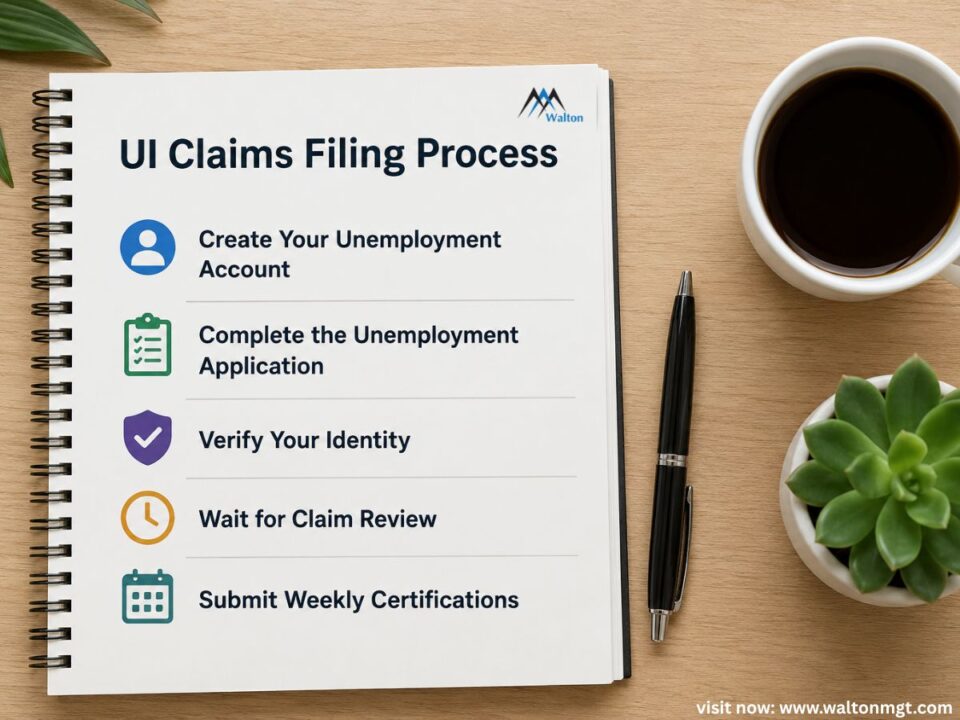
The actual filing process varies slightly by state, but most unemployment systems follow a similar structure.
1. Your Unemployment Account
Start by registering through your state unemployment portal. You’ll create login credentials and basic profile details before starting the unemployment UI claim process.
Keep your login information saved somewhere safe. People lose account access constantly.
2. Complete the Unemployment Application
This section asks for:
- employment history
- employer information
- wage details
- separation reason
- work availability status
Accuracy matters here. Filing a claim for unemployment with incorrect dates or incomplete employer information often triggers manual reviews.
3. Verify Your Identity
Many states now use additional identity verification tools to reduce fraud during UI claims filing.
That means applicants may need to upload:
- driver’s license
- passport
- selfie verification
- address confirmation
This extra step frustrates people, but state systems have become much stricter over the past few years.
4. Wait for Claim Review
After submission, the state reviews your unemployment application along with wage records and employer responses.
Some claims move quickly. Others don’t.
A lot depends on verification checks and employer response timelines.
5. Submit Weekly Certifications
This part surprises many first-time applicants.
Getting approved once does not mean payments continue automatically.
Most states require a UI weekly claim submission every week to confirm:
- work-search activity
- employment status
- income updates
- availability for work
Skipping even one weekly filing can pause benefits.
Where Most Unemployment Claim Delays Actually Happen
People often assume unemployment systems fail because they’re outdated.
Sometimes that’s true.
But many delays actually start with small filing mistakes.
Really small ones.
A wrong employment date. Missing separation details. Incomplete identity verification. Even inconsistent employer information can slow unemployment insurance claims significantly.
Common Filing Mistakes That Trigger Delays
- Incorrect employer dates
- Missing wage information
- Unverified identity documents
- Skipped weekly certifications
- Incomplete separation explanations
- Filing late weekly claims
The unemployment compensation weekly claim process depends heavily on consistency. Once information stops matching across filings, additional reviews usually begin.
That’s where frustration builds quickly.
Weekly UI Claims Are Where Many People Get Stuck
The initial application gets most of the attention, but weekly filings are usually where payment interruptions happen.
Here’s a quick look at common UI weekly claim problems:
Common Weekly Claim Problem | What Usually Causes It |
Payment delays | Missing weekly certification |
Claim suspension | Incorrect work-search updates |
Identity review holds | Login or verification issues |
Benefit interruption | Filing weekly claims late |
Pending status | Employer response delays |
Filing for weekly unemployment benefits consistently matters just as much as the original application itself.
That part catches many people by surprise.
A Quick Reality Check About Unemployment Systems
Honestly, unemployment systems can feel frustrating even when people do everything correctly.
Applications get flagged. Verification reviews take longer than expected. Weekly claims suddenly show “pending” without clear explanations.
It happens a lot.
Still, organized applications usually move much faster than rushed ones.
People who prepare documents early, double-check employment information, and stay consistent with weekly certifications tend to avoid the biggest UI claims filing problems.
Businesses managing larger workforce operations also pay close attention to Federal Unemployment Tax Act reporting and unemployment claims workflows to reduce delays, compliance issues, and unnecessary unemployment tax pressure.
Economic changes, layoffs, and industry shifts can also increase unemployment filing activity very quickly.
Some industries experience unemployment claim spikes much faster than others when workforce disruptions happen.
That pressure usually creates longer review timelines, heavier verification activity, and more weekly claim processing delays across state systems.
How Employers Respond to Unemployment Claims
Most applicants don’t realize that employers also respond during the unemployment insurance claims process.
Employers may review:
- Separation details
- Payroll records
- Employment dates
- Claim eligibility information
That employer response can affect how quickly claims move through review systems.
Businesses handling large numbers of claims often improve unemployment claims management workflows to reduce administrative pressure and improve response accuracy. Walton Management also explains workforce verification and the VOE and UI Claims Process in a related guide.
Why More Businesses Are Improving Unemployment Claims Workflows
As unemployment systems become more data-driven, employers are paying closer attention to claim accuracy, response timing, and workforce documentation.
That shift makes sense.
Delayed responses and inconsistent records can create bigger payroll and compliance issues later. Businesses also continue reviewing unemployment tax planning strategies as claim activity and workforce reporting requirements become more connected in 2026.
Many organizations now work with Walton Management to improve Unemployment Claims Management, workforce reporting, and response workflows without overwhelming HR teams internally.
Some businesses also use connected HR Automation Technology Solutions and unemployment insurance consultants to reduce filing mistakes and improve claim visibility across departments.
For companies managing higher claim volumes, working with a dedicated UI claims filing company can reduce operational stress quite a bit.
Walton Management helps employers streamline unemployment claims management solutions while improving workforce documentation, response accuracy, and reporting efficiency through more connected systems.
Conclusion
UI claims filing feels complicated because, honestly, it can be. There are deadlines, identity checks, weekly certifications, employer reviews, and multiple verification layers happening all at once. Small filing mistakes often create much bigger delays later.
Still, understanding how the unemployment application process works makes a huge difference. People who prepare documents early, submit accurate information, and stay consistent with weekly claims usually move through the unemployment benefits process much more smoothly.
Many workers only realize how important accurate unemployment filing is after payments get delayed or claims suddenly move into review status. That’s why staying organized from the beginning matters so much. Even simple things like checking employment dates, uploading the correct documents, and completing weekly certifications on time can help avoid unnecessary problems later.
As unemployment systems continue becoming more data-driven in 2026, both workers and employers are paying closer attention to claim accuracy, response timing, and verification processes. Walton Management helps employers improve unemployment claims management solutions by supporting better documentation, faster response workflows, and more organized workforce reporting processes.
At the end of the day, the unemployment process becomes much easier when people understand what the system is actually looking for and prepare for those steps early, instead of reacting after delays already happen.