
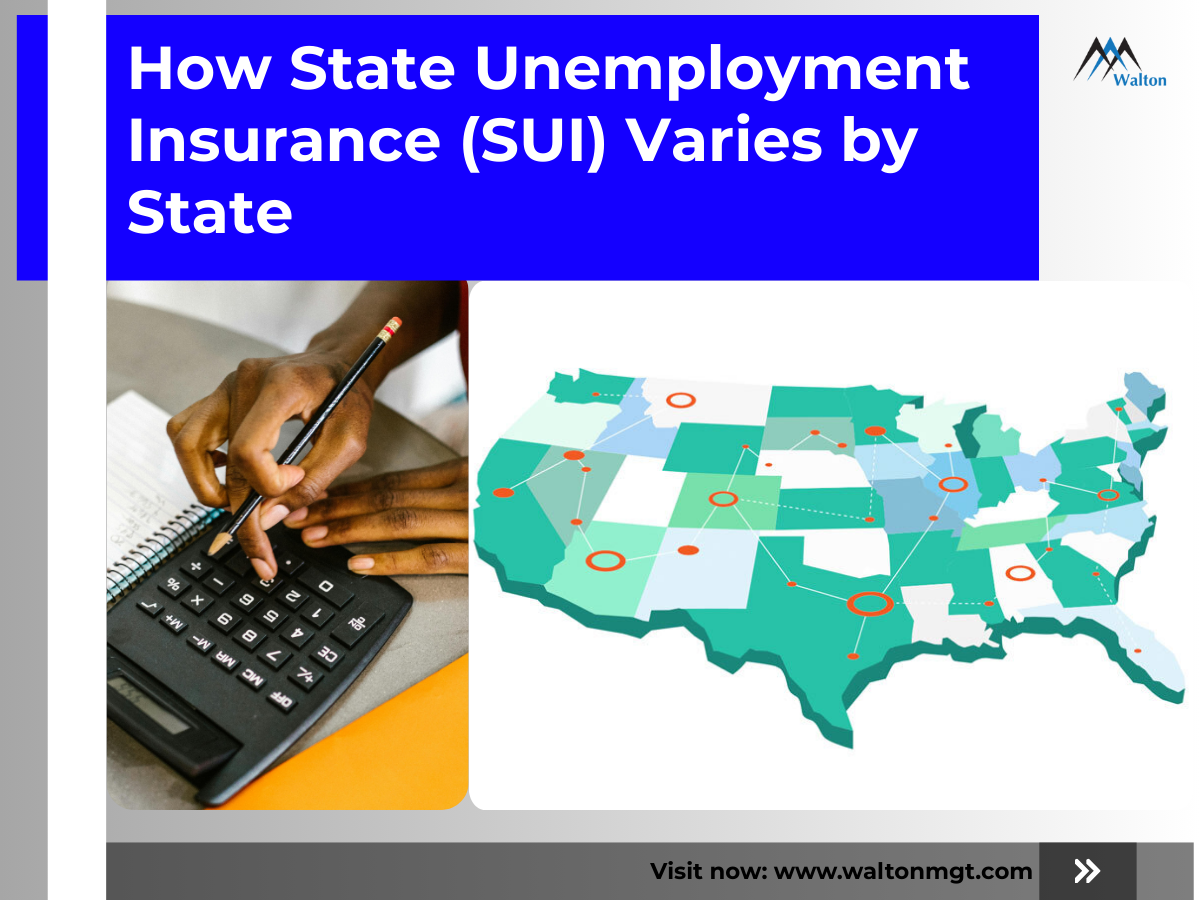
State Unemployment Insurance looks simple at first glance, but it starts behaving very differently once employers operate across state lines. Each state controls its own taxable wage base, tax rate structure, and experience-rating rules, which means unemployment costs are shaped more by location than most employers expect.
A UI claim that creates limited impact in one state can lead to higher future tax exposure in another. Those differences usually surface later, when unemployment tax rate notices arrive, and payroll projections no longer line up with earlier assumptions.
Unemployment taxes are not driven only by layoffs. Even routine claims can affect State Unemployment Insurance rates, especially in states that recalculate experience ratings more aggressively or apply lower wage thresholds. For employers managing payroll across multiple states, understanding how State Unemployment Insurance varies helps reduce surprises and supports more informed workforce planning.
Why State Unemployment Insurance changes the moment work crosses state lines
State Unemployment Insurance is tied more closely to where work happens than many employers realize. When payroll expands into a new state, the rules that shape unemployment taxes change immediately, even if headcount and wages stay the same. Taxable wage bases, contribution limits, and experience-rating formulas are all set at the state level, and those differences shape costs over time.
One state may apply SUI taxes to only a small portion of each employee’s wages, while another taxes a much higher share. Some states adjust employer tax rates slowly, while others recalculate annually and respond quickly to claim activity. That means a UI claim can sit quietly in one state but push rates higher in another, simply because the formulas are different, and how each UI claim is weighted varies by state.
Benefit structures play a role, too. States vary in how long benefits can be paid and how claim costs are assigned back to employers. Those variations help explain why unemployment expenses often feel uneven across state accounts, even when workforce changes look consistent.
For employers operating across multiple states, State Unemployment Insurance becomes less predictable without a clear understanding of these differences. Location alone can influence how unemployment costs develop year over year, which is why state-specific awareness matters as much as payroll size.
How SUI benefits differ across states and what employers usually feel
State Unemployment Insurance benefits are set at the state level, which is why the way benefits are paid and how long they last can vary significantly across the country. These benefit rules matter to employers because they shape how long claim costs stay active and how strongly those costs feed back into experience ratings and future SUI tax rates.
From an employer’s perspective, the cost impact grows as claim unemployment insurance benefits remain active longer and continue feeding into experience-rating calculations.
SUI benefits in New York, New Jersey, and Massachusetts
These states are known for higher benefit ceilings and longer potential benefit durations, especially during periods of elevated unemployment. Weekly benefit amounts tend to be higher, and extended benefits are more common. For employers, this often means approved claims remain active longer and carry more weight in experience-rating calculations.
SUI benefits in California, Washington, and Oregon
West Coast states combine moderate to high benefit levels with higher taxable wage bases. Washington and Oregon, in particular, allow benefits to run longer in qualifying cases, increasing the total value of paid claims. California’s structure is more predictable, but benefit payments still flow directly into State Unemployment Insurance calculations that can affect employer rates over multiple years.
SUI benefits in Texas, Florida, and Wyoming
These states maintain tighter benefit structures and lower taxable wage bases than many others. Weekly benefit amounts are generally lower, and benefit durations are more limited. For employers, this often results in slower SUI cost growth, even when UI claim activity occurs.
SUI benefits across the Southeast
Georgia, Alabama, Mississippi, Tennessee, South Carolina, and North Carolina follow similar models with shorter benefit durations and conservative benefit levels. Wage-based tend to be lower, which limits immediate employer exposure. Experience ratings in these states still respond to repeated claims, especially when claim unemployment insurance benefits are paid across multiple quarters.
SUI benefits in Pennsylvania, Ohio, Illinois, and Michigan
These states balance moderate benefit levels with experience-rating systems that respond more quickly to claim activity. Benefit durations can extend during economic downturns, increasing long-term cost exposure for employers. Illinois and Pennsylvania, in particular, are known for rate movement that closely reflects claim history, making unemployment claim management more relevant for businesses with ongoing workforce changes.
SUI benefits in the Plains and Mountain states
Kansas, Nebraska, Iowa, South Dakota, North Dakota, Montana, Idaho, Utah, and Colorado generally offer moderate benefits and systems designed to stabilize employer rates over time. Benefit durations are usually shorter, and wage bases sit closer to national averages.
SUI benefits in the Southwest
Arizona, New Mexico, and Nevada tend to apply moderate benefit caps with relatively low wage bases. Benefit payments are controlled, but experience-rating formulas can still move rates when claim activity increases.
SUI benefits in the Midwest and Upper Midwest
Minnesota, Wisconsin, Indiana, Missouri, and Kentucky place strong emphasis on reserve balances and long-term fund stability. Benefit levels are moderate, but claims remain on employer records for extended periods, influencing State Unemployment Insurance rates gradually.
SUI benefits in New England beyond Massachusetts
Connecticut, Rhode Island, New Hampshire, Maine, and Vermont generally offer moderate benefits with varying durations. Some states adjust benefits and rates more frequently, which can lead to noticeable changes in employer SUI costs even without major workforce shifts.
SUI benefits in Alaska and Hawaii
Alaska applies industry-specific adjustments alongside experience ratings, which can lead to uneven outcomes depending on the sector. Hawaii uses a higher taxable wage base than many states, increasing baseline SUI contributions before any claims occur.
Why a single UI claim can cost more in one state than another
A UI claim may feel like a one-time event, but its financial impact depends heavily on how each state’s State Unemployment Insurance system processes it. The same separation can lead to very different outcomes based on benefit levels, duration, and how quickly experience ratings are updated.
- At the center of these differences are a few core factors that vary by state:
- How high weekly benefits can go and how long they can be paid
- How much of those benefit costs are charged back to the employer
- How quickly do experience ratings respond to claim activity
- Whether benefit payments span multiple reporting periods
In states with higher benefit ceilings or longer benefit durations, claim unemployment insurance benefits tend to stay active longer, increasing how heavily those claim unemployment insurance benefits influence future SUI rates. That extended activity increases the weight of the claim when SUI tax rates are recalculated. In states that adjust rates more aggressively, employers may feel the impact within the next tax year.
In other states, the same UI claim may result in a slower rate movement, spreading the cost over time rather than creating an immediate jump. The difference is not about the claim itself, but about how each state’s system assigns and tracks claim costs.
For employers, this means a UI claim should never be viewed in isolation. Understanding how State Unemployment Insurance works in each state helps explain why similar workforce events can lead to very different tax outcomes.
Where unemployment claim management actually changes the outcome
Unemployment claim management rarely feels urgent when a claim first comes in. Most of the impact shows up later, when State Unemployment Insurance rates shift, and the cause is not immediately clear.
This becomes more noticeable when unemployment insurance benefits are paid across multiple quarters and remain tied to employer accounts longer than expected. Without consistent unemployment claim management, similar claims can produce very different cost outcomes across states.
Strong unemployment claim management helps employers respond consistently, track how claims move through each state system, and reduce unnecessary exposure tied to missed deadlines or incomplete information.
What happens after a claim is approved
Once a UI claim is approved, it does not simply close out. The cost stays attached to the employer through benefit payments and experience ratings. In states where claim unemployment insurance benefits run longer, the cost remains active and continues influencing future tax calculations.
How small gaps turn into higher costs
Missed deadlines, unclear separation details, or inconsistent handling across locations may seem minor at first. Over time, those gaps allow claims to move through the system with higher charge amounts. In states that recalculate experience ratings quickly, the result is often a higher State Unemployment Insurance rate without any new claims.
Why do multi-state employers feel it more?
Employers operating in more than one state tend to see these effects sooner. A claim handled differently across locations makes it harder to see patterns. Rising SUI costs are often blamed on workforce changes, when they are actually tied to how claims were handled months earlier.
Where payroll alignment supports better outcomes
Accurate payroll records and consistent wage reporting support stronger claim responses. When payroll solutions align with claim handling, fewer charges are misapplied, and disputes are easier to resolve. This becomes especially important when benefit payments span multiple quarters.
Unemployment claim management does not eliminate claims. It changes how clearly employers can see their long-term impact. For businesses managing workforces across different states, that visibility makes State Unemployment Insurance costs easier to anticipate and manage.
How payroll solutions influence State Unemployment Insurance costs
- Payroll decisions directly affect State Unemployment Insurance exposure:
Every wage report, pay adjustment, and classification decision feeds into how SUI taxes are calculated and how costs are assigned after a UI claim.
- Inconsistent payroll data creates avoidable SUI risk:
Errors like incorrect wages, delayed updates, or mismatched separation details often surface later as higher SUI rates rather than obvious payroll mistakes. These issues can also complicate unemployment claim management when claims are reviewed or challenged.
- Multi-state payroll complexity increases SUI sensitivity:
Different taxable wage bases and reporting rules mean small inconsistencies across states can quietly increase unemployment tax exposure, especially when UI claims are filed in multiple jurisdictions.
- Reliable payroll solutions reduce unnecessary claim-related charges:
Clean and consistent wage reporting makes it easier to match UI claims to the correct records and resolve issues before costs are locked in or incorrectly assigned.
- Accurate payroll keeps SUI rates tied to real workforce activity:
When payroll aligns with state requirements and supports effective unemployment claim management, State Unemployment Insurance costs tend to reflect actual employment changes instead of preventable reporting problems.
How workforce analytics help employers anticipate SUI changes
- Workforce analytics reveal where UI claims actually originate:
Looking at claim data alongside roles, locations, and employment types helps employers see which parts of the workforce generate repeated UI claim activity.
- Patterns become visible before SUI rates change:
Claim activity often builds slowly, and without analytics, employers only notice the impact once State Unemployment Insurance rates increase.
- State-level differences are easier to compare:
Workforce analytics help employers see which states respond more aggressively to UI claims and where experience ratings are most sensitive.
- Timing of claim costs becomes clearer:
When claim unemployment insurance benefits are paid across multiple quarters, analytics help track how long those costs remain active in experience-rating calculations.
- Better visibility supports proactive decision-making:
By understanding how workforce changes relate to UI claim trends, employers can adjust their hiring, scheduling, or separation practices before SUI costs increase.
- Analytics make State Unemployment Insurance more predictable:
Instead of guessing why rates changed, employers gain clearer insight into how workforce decisions influence long-term unemployment tax exposure.
Conclusion
State Unemployment Insurance varies widely by state, and those differences directly affect how UI claims, payroll decisions, and workforce changes show up in employer tax rates. What feels manageable in one state can become costly in another, simply because the systems respond differently.
Understanding how claims move through each state’s SUI structure helps employers avoid surprises and make more informed decisions. For businesses operating across multiple states, small gaps can compound quickly without visibility.
For employers looking to bring more clarity to their SUI exposure, unemployment claim management plays a central role in controlling long-term tax impact. Working with specialists in State Unemployment Insurance, unemployment claim management, and payroll solutions can help turn unpredictable costs into something far more manageable.