
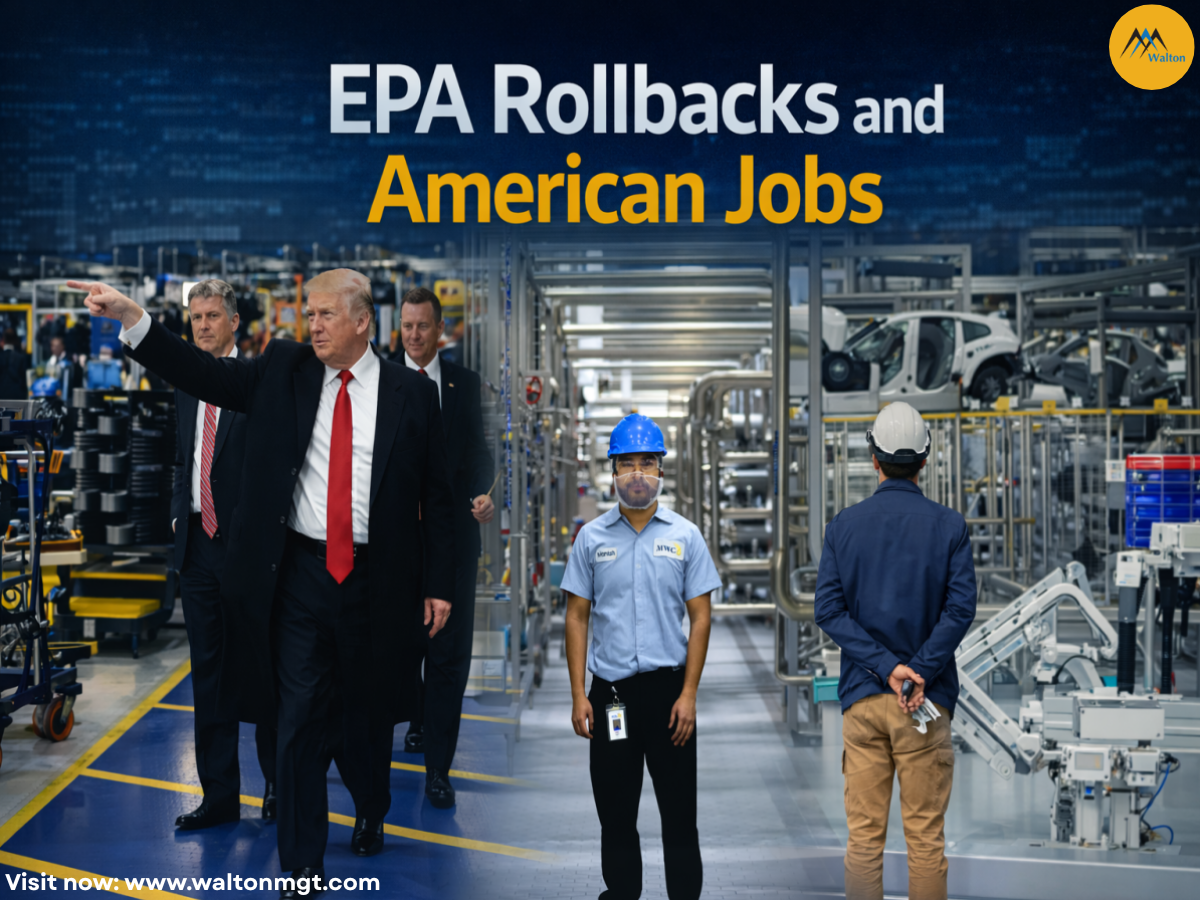
Let’s talk about this in plain terms. When people ask whether Trump’s war on the Environmental Protection Agency (EPA) killed American jobs, they usually expect a simple answer. It sounds like it should be easy. Fewer rules should mean more jobs, right?
Sometimes, in the short run, that’s exactly how it feels. During the Trump administration, shifts in environmental enforcement lowered compliance pressure for some industries. That reduced costs, sped up production, and gave employers more flexibility when planning staffing. In a few sectors, UI claims stayed steady, and unemployment insurance cost control felt easier to manage.
But the job picture does not stop there. When environmental rules change quickly or enforcement becomes unpredictable, businesses start planning differently. Long-term investments get delayed. Expansion decisions slow down. Hiring becomes cautious even if layoffs are not happening yet. Workforce metrics can still look healthy on the surface while workforce analytics start to reveal hesitation underneath, a pattern highlighted in research from the Brookings Institution.
Federal labor data also shows that job stability often lags behind policy shifts, meaning early cost savings do not always translate into durable employment trends, according to analysis from the U.S. Bureau of Labor Statistics.
That’s why this question cannot be answered with a clean yes or no. Short-term relief and long-term stability do not always move in the same direction, and jobs sit right in the middle of that tension.
What actually changed under Trump’s Environmental Protection Agency approach
What changed under Trump was not one dramatic rule or a single announcement. It was the overall signal sent to businesses. Environmental enforcement priorities shifted. Inspections slowed in some areas. Penalties became less predictable across regions. For employers, that uncertainty mattered more than politics.
In practical terms, the most visible changes included:
- Fewer inspections and reduced enforcement activity in some industries
- Delays or rollbacks tied to emissions standards and reporting requirements
- Less consistent enforcement across regions
- Greater reliance on executive direction rather than long-term regulatory clarity
Businesses do not plan production based only on today’s costs. They look ahead. They try to figure out what rules will still apply after a project is underway. During this period, reduced oversight often felt like permission to move faster. Policy analysis from the Congressional Research Service notes that regulatory uncertainty can affect capital investment before it shows up in employment data.
Compliance budgets shrank. Reporting requirements eased. For some companies, that lowered operating costs quickly and made short-term staffing decisions easier.
At first, hiring could feel more stable. Projects moved faster. Staffing plans felt simpler. In some sectors, unemployment insurance claims stayed under control.
Over time, though, inconsistency created hesitation. Long-term planning became harder. Expansion slowed. Workforce metrics could still look fine on the surface, even as workforce analytics began to show quieter signs of slowdown. That hesitation, more than any single policy change, shaped long-term job stability.
Where the short-term job gains came from
It would be misleading to say the rollback of environmental enforcement did not help some employers in the short run. For certain industries, especially those with high compliance costs, the shift created breathing room. That space influenced how businesses approached hiring, scheduling, and day-to-day operations.
Lower compliance pressure
When reporting and monitoring requirements eased, companies spent less time and money on paperwork. That freed up cash flow and management attention. For some employers, those savings went directly into keeping teams intact or adding roles they had delayed filling.
Faster production timelines
With fewer regulatory delays, projects moved forward more quickly. Construction, manufacturing, and energy-related businesses could plan schedules with fewer interruptions. When timelines stabilize, staffing follows.
More predictable short-term staffing
In the near term, this environment helped stabilize workforce metrics. Employers were better able to forecast hours, shifts, and headcount. In some cases, UI claims remained steady because businesses were not forced to pause operations or cut staff unexpectedly.
Relief on unemployment-related costs
Short-term operational stability can support unemployment insurance cost control. When layoffs are avoided, employers face fewer unemployment insurance claims, which helps keep contribution rates from climbing.
These benefits were real. But they were also closely tied to timing.
Where the long-term tradeoffs begin
Short-term savings are easy to spot. Long-term effects take time to show, and they usually appear in planning decisions before they appear in payroll numbers.
Uncertainty slows long-term investment
When environmental enforcement feels inconsistent, employers hesitate to commit to large projects. Equipment upgrades, facility expansions, and new market entries get delayed.
Hiring becomes cautious, not aggressive
Instead of cutting jobs, many employers slow down approvals. Teams rely more on existing staff or temporary labor. Workforce metrics may stay stable, but growth loses momentum.
Training and development take a back seat
Training budgets are often the first to tighten. That limits skill development and weakens long-term workforce readiness.
Hidden pressure on unemployment-related costs
Delayed investment can lead to sharper corrections later. When that happens, unemployment insurance claims rise quickly, making Unemployment Insurance Cost control harder.
Early warning signs show up in data
Workforce analytics often reveal longer hiring cycles and reduced internal movement before job losses appear.
These tradeoffs do not erase jobs overnight. They weaken the foundation under future job growth.
Why predictability matters more than deregulation
For most employers, the real issue is not how strict a rule is. It’s whether that rule is going to stick.
Predictable environmental policy gives businesses something solid to plan around. Hiring plans align with production schedules. Capital investment lines up with staffing needs. Workforce planning feels intentional instead of reactive.
Deregulation without clarity creates mixed signals. Short-term flexibility feels helpful, but uncertainty limits long-term investment in people.
This is where workforce metrics and workforce analytics work best together. Metrics show what is happening now. Analytics help employers understand whether those trends are sustainable.
Predictability also helps employers anticipate unemployment insurance claims and manage unemployment insurance cost control proactively instead of reacting after costs rise.
This is where Walton Management supports employers by aligning workforce analytics, unemployment insurance claims, and long-term planning into a single, practical strategy.
How policy shifts ripple into workforce costs and incentives
Environmental policy does not live in its own lane. Its effects eventually show up in workforce costs, incentives, and hiring strategy.
Unemployment exposure is rarely immediate.
When hiring slows instead of stopping, unemployment insurance claims may not rise right away. But when corrections happen, they tend to happen fast.
Tax planning depends on stable hiring decisions.
Employer incentives only work when hiring plans are clear. Programs like the work opportunity tax credit depend on intentional workforce expansion. Uncertainty leads many employers to leave employer tax credit opportunities unused.
Workforce analytics help connect the dots.
Tracking hiring pace, retention, and internal movement helps employers adjust earlier and protect margins.
Compliance uncertainty affects incentive use.
When rules feel temporary, employers focus on survival instead of optimization. Predictability makes tools like UI claims management practical instead of theoretical.
What this means for American jobs beyond the headlines
Job numbers can make things look simple when they really aren’t. Employers don’t hire or invest based on political messaging. They respond to how stable the environment feels and whether they trust today’s rules to still matter tomorrow.
- Reduced Environmental Protection Agency enforcement lowered costs for some businesses and helped preserve existing jobs in the short term, especially in industries with heavy compliance demands.
- Short-term stability did not always translate into long-term job growth. When policy direction felt uncertain, many employers shifted from expanding to holding steady.
- Hiring often slowed quietly rather than stopping outright. Roles were delayed, not eliminated, which kept workforce metrics looking healthy on the surface.
- Training and workforce development were frequently scaled back as employers avoided long-term commitments.
- Unemployment insurance claims stayed manageable for a time, but delayed investment increased the risk of sharper corrections later, making unemployment insurance cost control harder.
- Employers paying attention to UI claims management trends were better positioned to see pressure building before it showed up as layoffs.
- Workforce analytics helped reveal early signs of hesitation, such as longer hiring cycles, reduced internal movement, and more conservative staffing plans.
Taken together, these patterns explain why the impact on jobs can feel confusing. Trump’s Environmental Protection Agency approach helped some employers stabilize at the moment, but it also made future job growth harder to predict. Jobs were not wiped out overnight, yet the conditions that support steady, durable employment became less certain over time.
What the job numbers don’t show right away
In the short run, reduced Environmental Protection Agency enforcement helped some employers. Costs came down. Operations moved faster. Existing jobs were easier to protect, especially in industries dealing with heavy compliance requirements. That part of the story is real.
What’s harder to see is what happens next. When environmental rules feel temporary or politically uncertain, businesses stop thinking long-term. Hiring slows without stopping. Investment gets delayed. Employers focus on maintaining payroll instead of expanding it. Workforce metrics may still look stable, but the underlying momentum quietly starts to slip.
This is where uncertainty matters more than regulation itself. Jobs don’t disappear overnight. They just become harder to plan for, harder to grow, and easier to lose when conditions change again.
So is Trump’s war on the Environmental Protection Agency killing American jobs?
Not in a simple, immediate way. But it did change how employers behaved.
Businesses that relied only on short-term relief became more exposed later. Those who paid closer attention to unemployment claims management, workforce analytics, and the strategic use of incentives were better positioned to stay steady as conditions shifted. This is the kind of long-view planning Walton Management helps employers put into practice, especially when policy uncertainty makes workforce decisions harder to time.
Research from the Brookings Institution and data from the U.S. Bureau of Labor Statistics point to the same conclusion. Predictable regulatory environments tend to support steadier investment and more durable employment over time, even when deregulation feels appealing at first.
Our Hot Take
While weakening the Environmental Protection Agency can provide a short-term boost to certain jobs and parts of the economy, history suggests those gains often come at a higher cost later. Rolling back environmental protections tends to shift expenses into healthcare, environmental cleanup, infrastructure damage, and broader economic strain, costs that ultimately harm both the economy and public well-being.
With uncertainty around future presidents and policy direction, employers should be cautious about making long-term changes based on temporary rollbacks. Maintaining Environmental Protection Agency-safe policies remains the more stable approach for managing risk and protecting jobs over time.
During uncertain times, Walton Management helps employers stay steady by managing UI claims, employee background verification, and workforce analytics. Contact our team at Walton Management to learn how we can support your business.