
It always hits at the same moment. You’re reviewing payroll, everything feels stable, and then a new Unemployment Insurance Claim notice lands in your inbox. One UI Claims notification is enough to make you rethink your plans for the entire quarter. And honestly, this happens more often than employers admit.
What looks like a simple form is actually the beginning of a cost cycle that connects your workforce, your tax rate, and your payroll planning for the next year. When you understand how those pieces fit together, the numbers stop feeling random. You can see why the country collects unemployment taxes, how the system pays workers who lose their jobs, and why employers carry most of the financial responsibility.
And once you see the full picture, the whole process becomes easier to work with. Not perfect, not predictable every time, but definitely clearer.
Why do employers pay unemployment taxes?
Most employers don’t think about unemployment taxes until a fresh Unemployment Insurance Claim shows up, and suddenly, UI Claims become part of the conversation, whether you planned for them or not. The reason these taxes exist is actually straightforward. The unemployment system needs a steady fund to support people who lose their jobs through no fault of their own.
The federal guidelines are laid out in FUTA rules, which explain how the money is collected and who pays into the system:
Every employer contributes, and every contribution feeds the same pool that pays weekly benefits. States add their own unemployment tax on top of the federal one. Together, they create the fund that covers approved UI Claims. Whenever someone files an Unemployment Insurance Claim, the benefits they receive are tied directly to the money that employers have been contributing throughout the year.
Once that becomes clear, unemployment taxes stop feeling like surprise charges and start looking like part of a system you’re already participating in.
How UI claims bounce back and shape what employers pay? and shape what employers pay?
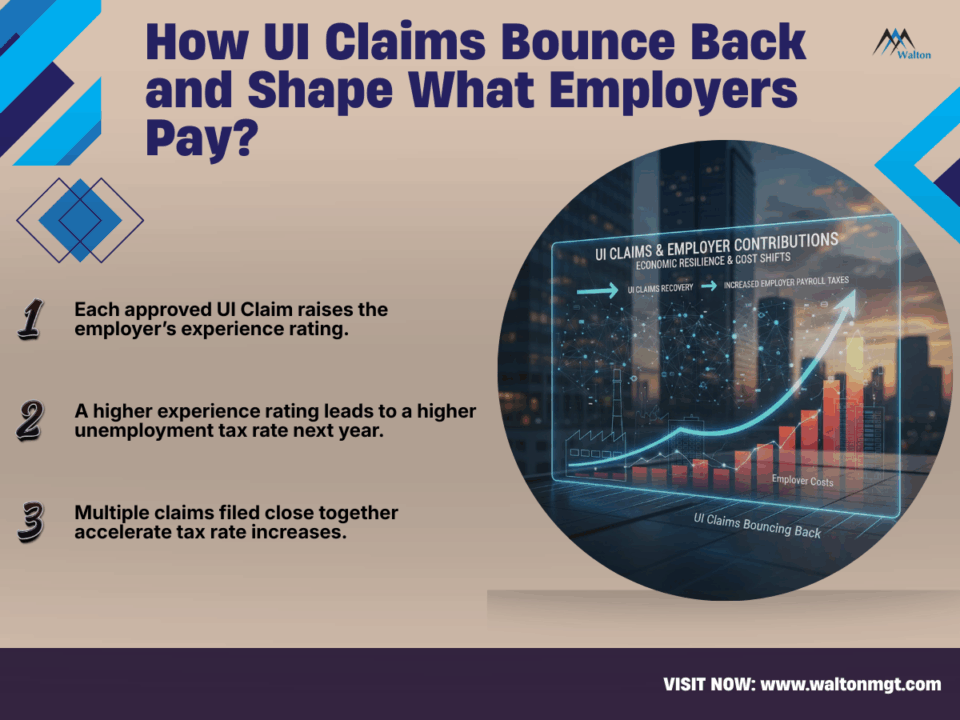
Think about unemployment costs the way you think about car insurance. One accident can raise the premium. One UI Claims approval can raise an employer’s unemployment tax rate. It doesn’t disappear into a government void. It circles back.
Here’s what usually happens behind the scenes:
- UI Claims are paid out using funds collected from employers.
- More approved claims increase an employer’s experience rating.
- A higher rating usually means a higher unemployment tax rate next year.
- Even one unexpected Unemployment Insurance Claim can shift payroll numbers.
When the state approves UI Claims, it updates the employer’s record. The more claims you have, the higher the probability that next year’s unemployment tax rate will climb. And if several people file Unemployment Insurance Claim paperwork within a short window, the system adjusts quickly because the fund has to stay balanced.
So the tax rate increases aren’t random. They’re responding directly to the pattern of claims tied to your business.
What really happens when a worker files a claim?
Employers usually see just the approval letter, not the chain reaction that begins when someone leaves their job. An Unemployment Insurance Claim isn’t a single moment; it’s a process.
A claim typically begins when a former employee logs into the state portal and answers questions about why they left. Then the state reviews what the employee says, compares it with the employer’s report, and decides whether the person qualifies. That decision shapes how your unemployment tax rate might look next year.
If the state approves UI Claims, benefits start going out weekly. Those weekly payments are pulled from the pool funded by employers. The longer the claim stays active, the more it influences your experience rating, which eventually affects your tax bill.
Most of this happens quietly, and employers often don’t feel the financial impact until months later. But by that time, the numbers are already in motion.
How does a simple claim turn into real money?
The financial impact of an Unemployment Insurance Claim doesn’t hit the same week someone leaves. It shows up later. Once the state approves UI Claims, weekly benefits begin, and each payment quietly affects the employer-funded pool. Those small deductions start adjusting your experience rating in the background.
The longer the claim stays open, the more it shapes next year’s tax bill. The unemployment system watches the pattern, not the size of each payment, which is why a long-running UI Claims case can influence costs more than you expect.
That’s usually when employers connect the dots and realize a simple exit months ago is now showing up in their payroll planning.
Why employer involvement matters?
Many employers assume they can’t influence an Unemployment Insurance Claim, but they actually play a major role. Clear, timely responses help the state make accurate decisions on UI Claims. When details are missing or delayed, claims often get approved by default.
Accurate documentation about separation reasons or policy issues can prevent avoidable Unemployment Insurance Claim approvals and help keep UI rates steady.
It’s not about challenging every claim. It’s about giving the state the full story so your tax rate reflects what really happened.
Once you watch a UI Claims case move through the process, it becomes obvious that every approval is a preview of next year’s employer costs.
How do UI costs hit payroll harder than most employers expect?
What usually drives payroll costs up:
Payroll budgets feel steady until something shifts them. And nothing shifts them faster than an approved UI Claims notice. Here are the triggers that usually push unemployment tax rates upward:
- A single UI Claims case that stays open for weeks
- Multiple claim filings within the same quarter
- A sudden spike in your experience rating
- A new unemployment tax rate letter is arriving unexpectedly
Most of these changes appear inside payroll systems before HR even has time to react. That’s why payroll management becomes such a key part of understanding UI costs. When payroll teams track what’s happening with Unemployment Insurance Claim cases throughout the year, they can anticipate rate changes instead of being surprised by them.
The size of the benefit paid out doesn’t always match the size of the tax increase. The system is built around your experience rating, which means the tax rate follows the pattern of claims, not the dollar amount paid to the worker.
So when that new rate letter comes in, it’s not random. It’s the system recalibrating itself.
For employers, though, it feels like watching a cost you didn’t choose quietly settle into next year’s payroll numbers. And that hits hard, especially when margins are already tight.
The role of workforce analytics in keeping UI costs under control
Some teams generate more UI Claims than others, and it’s rarely random. Turnover patterns, job demands, leadership style, work schedules, and training gaps all shape how often someone files an Unemployment Insurance Claim. But employers can’t respond to what they can’t see.
That’s where workforce analytics becomes incredibly useful.
Workforce analytics helps employers recognize turnover signals before they lead to another claim. You start to see which teams experience burnout cycles, which roles struggle with workload spikes, and where communication gaps may be pushing people out. Without data, all of this stays hidden until a claim lands in your inbox. With analytics, it becomes visible and manageable.
Once you understand the patterns, reducing claims becomes a natural outcome. If a particular department shows recurring exits every spring, you know where to investigate. If a role consistently files Unemployment Insurance Claim cases within 90 days of hire, you can look at onboarding, job clarity, or training.
This doesn’t require an expensive overhaul. Sometimes it’s small adjustments that make the biggest difference. And when those changes prevent even one or two UI Claims cases from being filed, your future rate stays steadier.
Effective workforce analytics does more than explain why turnover happens. It gives employers the chance to act before a claim hits the system.
A real-world look at how UI costs add up fast
UI costs don’t jump overnight. They build quietly, usually starting with a single UI Claims notice you barely paid attention to. It feels routine at first. Then a second notice arrives. And suddenly, payroll starts watching more closely.
Weekly benefit payments start flowing out of the unemployment fund. Your experience rating begins to shift. Another Unemployment Insurance Claim gets approved, and the system starts recalibrating in the background. You won’t feel the final impact until the state releases the next tax rate.
But that’s when everything clicks. Not when the claim was filed.Not when benefits started.
When the new rate letter arrives, that’s the moment employers see how the last several months really added up.
UI costs grow gradually, then reveal themselves all at once. Once you understand that cycle, claim notices stop feeling like small administrative tasks. They become indicators of what next year’s payroll might look like.
Simple moves employers can make to keep UI costs steady
There’s no single fix for unemployment tax rates, but a few steady habits make UI costs much easier to manage. Clear communication and consistent documentation go a long way in preventing avoidable Unemployment Insurance Claim approvals.
Responding to UI Claims with accurate details helps the state understand what happened. Keeping clean records of separations and reasons for leaving reduces confusion later. Paying attention to turnover patterns gives employers a chance to correct issues before they lead to another claim. Even small adjustments help stabilize experience ratings over time.
Good habits in payroll management also make a difference. When payroll teams stay aware of active or pending claims, they can prepare for possible rate changes rather than being caught by surprise. And when an employer tax credit applies to certain hires or workforce decisions, it creates extra room in the budget to balance UI costs.
Small operational improvements add up, especially when they prevent even one Unemployment Insurance Claim from turning into a long-running case. Steady processes usually lead to steadier tax rates.
Why does understanding UI costs help employers plan more confidently?
Once employers understand how unemployment taxes are built, the system becomes much easier to navigate. Looking at UI Claims isn’t just reviewing paperwork anymore. It’s understanding how each claim fits into the formula that shapes next year’s tax rate.
When employers see how turnover, claim approvals, and experience ratings connect, payroll planning feels less unpredictable. Budget adjustments make more sense because they’re tied to real activity in the business. Even though no one can fully predict future UI costs, understanding the cycle helps teams prepare instead of reacting.
It’s not about avoiding every Unemployment Insurance Claim. It’s about seeing how the system responds to them and using that insight to make more stable long-term decisions. If you need help understanding your UI costs or reviewing your claims, feel free to reach out to our team for guidance.
A little clarity goes a long way. And once employers understand what drives UI costs, they can shape their workforce decisions with more confidence and fewer surprises.